How to Create Corporate Networking Events People Actually Remember
Corporate Networking Events

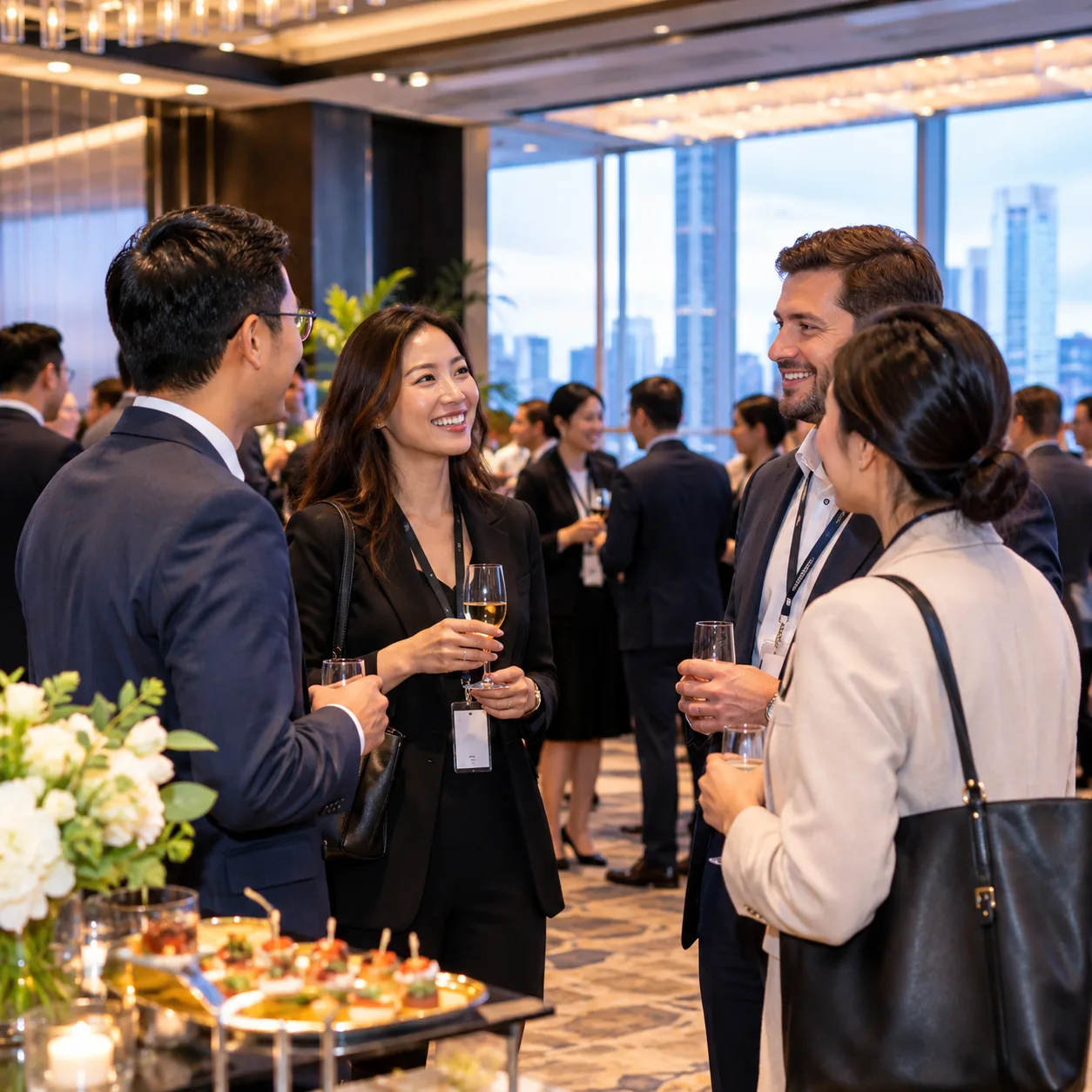
Most networking events are forgettable. Guests collect a few business cards, finish a drink and leave. Yet attendees want more from them. Freeman's 2025 trends report found that 58% of attendees were motivated by networking in 2024, up from 39% in 2021. Wanting connection and finding it are different things. BizBash's summary of the report notes that 40% of attendees find networking awkward. That gap is a design problem. Memorable events shape who meets whom, how conversations start and what happens afterwards.
Start With a Clear Purpose
Decide what the evening should achieve. Guests remember corporate networking events that had a point, not those that simply had food. A partner mixer, a client appreciation night and a cross-team evening each need different guests and formats. Write the goal in one sentence. An example goal is to introduce new suppliers to the operations team. Then test every decision against it, from the invite list to the room layout.
Curate the Guest List
A good room is the cheapest way to improve an event. Invite people who would benefit from meeting each other, not just everyone on your contact list. Balance the mix. A room of only senior leaders can feel stiff, and a room of only newcomers can lack direction. Include a few confident connectors who enjoy introducing others. Cap the numbers so people can reach each other without a struggle. Send a short pre-event message with the purpose, the dress code and who will be there. People who know what to expect arrive more relaxed. Hilton's late-2025 survey points the same way for 2026. 49% of respondents expect meeting new people and bonding with colleagues to be their main reason to attend. Your guest list should serve that motive.
Choose a Venue That Suits the Format
The venue sets the tone before anyone speaks. A room that is too large makes a good crowd feel thin. A room that is too small turns conversation into a squeeze. Match the space to your guest count and format. Standing events need open floor and somewhere to perch. Seated formats need clear walking routes. Check transport links so guests can arrive and leave without stress. Visit at the same time of day as your event, and listen for noise from neighbouring spaces and kitchens.
Make the First Ten Minutes Easy
The arrival is where awkwardness peaks. Guests stand near the door, scan the room and head for the drinks table. Have hosts greet people by name and introduce them to someone. Print name tags with a conversation hook, such as "ask me about my first job". A simple prompt gives strangers an easy opening line. Consider handing each guest a welcome drink at the door, so nobody arrives empty-handed. Place the registration desk away from the main room so it does not block the entrance.
Give Conversations a Light Structure
Open mingling suits confident guests. Everyone else benefits from a little structure. Bizzabo's 2025 research found that only 53% of attendees say the events they attend include structured networking tools or opportunities. Options are simple. Seat guests at tables with a loose topic. Run a short round where guests introduce themselves in 30 seconds. Place question cards on high tables. Keep each device optional, so nobody feels forced. Rotate the format through the year, so regular guests do not meet the same routine each time.
Design the Room for Movement
Layout shapes behaviour. A crowded entrance, a single bar and loud music all discourage conversation. Use standing tables to let people join and leave groups. Spread food and drink points around the room to avoid queues. Keep music at a level where people can hear each other without leaning in. Add one quieter corner for guests who want a calmer chat.
Brief Your Hosts and Speakers
Staff who attend the event shape its atmosphere. Brief them on the goal, the key guests and how to include people standing alone. Ask them to network, not just supervise. Speakers need a brief too. Give each a time limit and a clear purpose, such as welcoming guests or introducing a partner. Short remarks keep energy in the room. A host who ends on time earns goodwill that carries into the conversations afterwards.
Keep the Corporate Tone Human
Company-hosted events can drift into sales presentations. Guests notice quickly and switch off. Keep branding present but light. Let the format reflect your company culture, whether relaxed or formal. If sponsors take part, give them a role that invites conversation. Hosting a table works better than a long pitch. Guests should leave with a better view of your company because they enjoyed the evening.
Create One Moment Worth Talking About
People rarely remember the canapés. They remember one distinct moment. It should connect to the purpose of the evening, not just look impressive. A short showcase from a partner, a live demonstration or a local food station can serve as that anchor. Pick one and do it well. Several competing attractions dilute the evening and pull people away from each other. Brief your photographer on the moment so it is captured without staging.
Protect Some Downtime
Packed schedules wear guests out. In Hilton's research, 67% of attendees felt less engaged without downtime. Another 55% said they would skip sessions to decompress if breaks were missing. Leave gaps between formal items. Offer somewhere to sit and a quiet space. Guests who feel rested hold better conversations in the second half of the evening. Plan the finish as well. A clear closing moment, such as a thank-you from the host, tells guests the formal part is over. It also invites them to linger.
Follow Up While the Evening Is Fresh
The event ends when the follow-up lands, not when the doors close. Send a thank-you message within a day or two. Share a few photos, and introduce guests who agreed to meet again. With consent, circulate a short list of attendees and their roles. A specific, personal message works better than a generic mass email. Ask one question in your follow-up, such as who guests would like to meet at the next event. The answers feed directly into your next guest list. Note any commitments made on the night, and track whether they happen.
Putting It Together
Memorable networking is designed, not accidental. Start with a purpose, curate the room, make arrivals easy and add light structure. Then protect downtime and follow up promptly. You do not need a large budget for any of this. You need clear decisions made early, and the discipline to cut what does not help guests connect. Run the next event, ask guests what worked, and keep refining.